
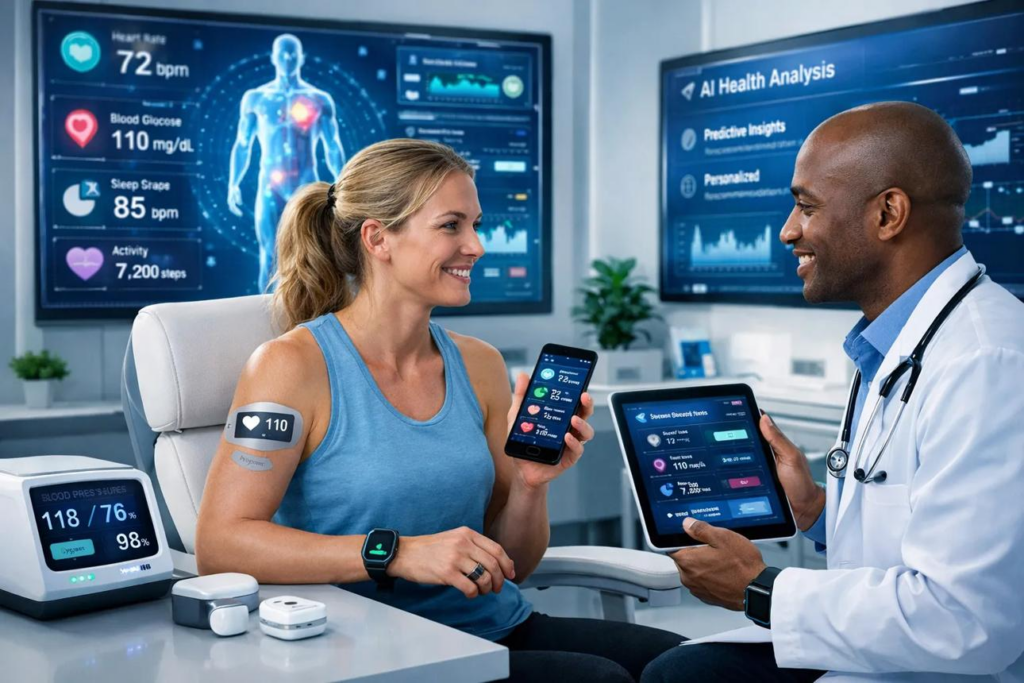
Digital healthcare has already changed where and how patients can access medical services. Telehealth consultations, electronic prescriptions, patient portals, wearable devices, and remote monitoring have reduced the need for every interaction to begin inside a clinic.
The next transformation may be less about access and more about relevance.
Healthcare has traditionally relied on standardized pathways because they are practical for treating large populations. Yet patients differ in their medical histories, lifestyles, medications, risk factors, preferences, and responses to treatment. As digital systems become more sophisticated, healthcare providers have greater opportunities to use those differences to create more individualized experiences.
Personalization could therefore become one of the defining characteristics of the next generation of digital health.
From Digital Access to Individualized Care
The first wave of digital healthcare largely concentrated on moving existing processes online. Patients could book appointments through websites, speak with clinicians remotely, access medical records electronically, and manage certain prescriptions without making unnecessary trips to a healthcare facility.
Those changes improved convenience, but digitizing an existing process does not automatically make it personalized.
The next stage involves using relevant patient information to determine what support an individual may actually need. Medical history, previous treatments, current medications, age, lifestyle factors, symptoms, and treatment preferences can potentially contribute to a more contextual healthcare experience.
SemanticLast has examined this development in its coverage of digital healthcare platforms and preventative care, noting how modern healthcare is increasingly moving away from generic models toward individualized care based on factors such as medical history, lifestyle, existing conditions, and patient goals.
Personalization does not mean allowing an algorithm to independently decide someone’s treatment. Instead, technology can help organize relevant information so qualified professionals have better context when making clinical decisions.
AI Could Make Complex Health Data More Useful

Modern healthcare generates enormous quantities of data. Laboratory results, medical records, prescriptions, wearable devices, imaging, symptoms, and previous treatment responses can all contribute information about an individual patient.
The challenge is turning that information into something clinically useful.
Artificial intelligence and machine learning can identify patterns across large datasets much faster than a person could examine them manually. In the future, these technologies may help healthcare professionals identify risk patterns, highlight relevant information in medical histories, support medication reviews, or determine which patients may benefit from additional follow-up.
AI is already influencing earlier parts of medicine. SemanticLast’s overview of AI and automation in drug development describes applications including drug design, predictive modelling, automated screening, and post-market safety monitoring.
Bringing similar analytical capabilities closer to patient care could support more responsive digital health systems. However, recommendations still need appropriate clinical oversight, and the quality of any output depends heavily on the quality and relevance of the underlying data.
Medication Management Could Become More Personal

Medication is an area where personalization has considerable practical value. Two patients with apparently similar conditions may have different medical histories, allergies, existing prescriptions, previous side effects, or other factors that influence treatment decisions.
Digital systems can potentially make this information easier to consider throughout the medication journey.
For example, a patient using a regulated online pharmacy may benefit from a digital process that connects appropriate prescription information with medication history and professional pharmacy oversight. Instead of treating the transaction like an ordinary e-commerce purchase, a well-designed digital service can preserve the healthcare safeguards surrounding medication.
Technology could also make routine medication management more responsive. Refill reminders might take account of actual prescription schedules, while digital systems could help flag potential duplication or information that requires professional review.
The objective should not be to automate clinical judgment away. It should be to give healthcare professionals and patients better information at the appropriate point in the process.
Personalization Requires Trust and Responsible Data Use
More personalized healthcare requires more information about the individual, creating an unavoidable question: how much personal data should a healthcare platform use?
Medical information is particularly sensitive. Systems that collect health histories, medication information, symptoms, or behavioural data need strong security and responsible data-management practices.
Patients should also understand why particular information is being collected and how it contributes to their care. Personalization becomes much less attractive when it feels like surveillance rather than a useful healthcare service.
AI introduces additional considerations. Algorithms can inherit limitations or biases from the data used to develop them. A system trained on information that does not adequately represent different populations may perform differently across patient groups.
Human oversight therefore remains essential. Personalized digital healthcare should support professional judgment and informed patient participation rather than turning complex medical decisions into unexplained algorithmic outputs.
Convenience and Personalization Need to Work Together
Digital healthcare has often competed primarily on convenience. Faster appointments, remote consultations, easier prescription management, and home delivery can all reduce friction for patients.
Personalization adds another dimension: making those convenient services more relevant to the person using them.
An online pharmacy, for example, can provide convenient medication access, but the broader digital healthcare experience becomes more valuable when appropriate information, professional oversight, prescription requirements, and patient circumstances remain connected.
The same principle applies to telehealth. A quick virtual appointment is useful, but continuity can be improved when the clinician has access to relevant history rather than treating every interaction as an isolated encounter.
The strongest digital healthcare systems may therefore be those that combine convenience with continuity. Patients should not have to choose between a fast digital experience and healthcare that understands their individual circumstances.
The Future Could Be Personal Without Becoming Impersonal
Personalization may sound inherently patient-centered, but technology alone does not guarantee better healthcare.
An algorithm can process data, but it cannot fully understand how illness affects someone’s family, work, fears, priorities, or quality of life. Automated reminders can support adherence, but they cannot replace a meaningful conversation when a patient is worried about treatment. Digital access can remove logistical barriers, but some conditions still require physical examination and face-to-face care.
The most promising model is therefore not one in which technology replaces healthcare professionals. It is one in which digital tools remove unnecessary administrative friction, organize complex information, and give professionals more useful context for patient care.
As healthcare becomes increasingly connected, personalization could help shift digital medicine away from simply replicating traditional services on a screen. Instead, technology can contribute to healthcare experiences that respond more intelligently to individual needs.
That would represent a significant evolution. The defining question for the next generation of digital healthcare may no longer be whether patients can access care online, but whether the care they access recognizes them as individuals.