
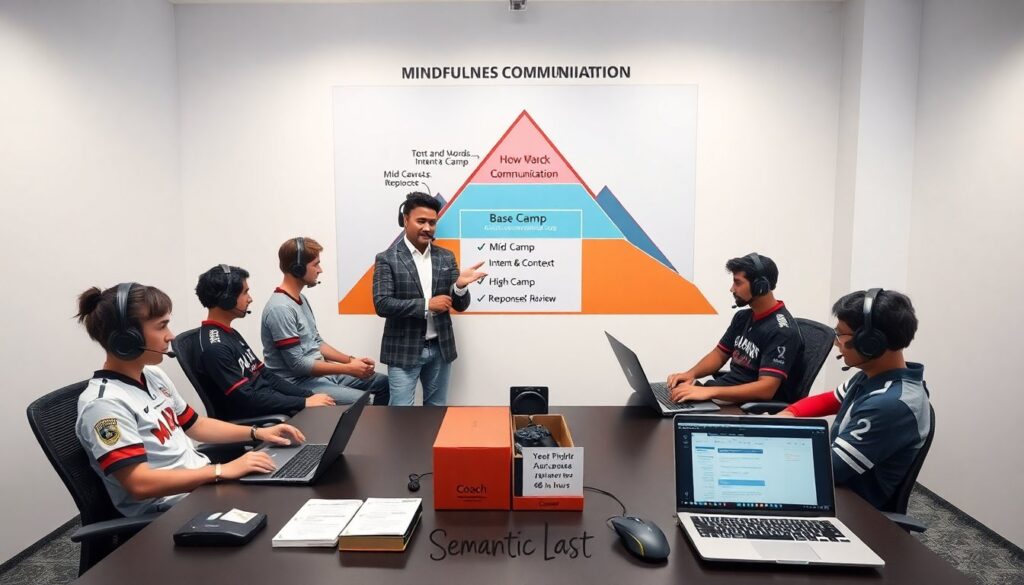
mindfulness communication mountain buy gamer semanticlast guides players to speak and listen with care. It trains players to avoid quick reactions and to choose words that match intent. This approach reduces conflict, improves teamwork, and helps players make better buying choices. The article explains why this skill matters and how players can use simple steps to change chat habits and shopping habits.
Key Takeaways
- Mindful communication mountain buy gamer semanticlast teaches gamers to pause and choose words carefully to reduce conflict and improve teamwork.
- Using the mountain metaphor, players progress through levels of listening, intent checking, and thoughtful responding to enhance chat clarity.
- SemanticLast thinking helps gamers focus on precise meaning to avoid misunderstandings and lowers toxic interactions within teams and communities.
- Applying mindful communication techniques supports better buying decisions by encouraging players to evaluate exact needs, product claims, and community tone before purchasing.
- Daily exercises like phrase reform and the purchase pause build mindfulness skills that improve in-game communication and purchasing habits.
- Clear chat norms and a shared glossary reduce toxicity and foster accountability, benefiting both gameplay and community interactions.
Why Mindful Communication Matters For Gamers
Gamers face fast chat and high pressure. Mindful communication mountain buy gamer semanticlast appears as a useful toolkit. It helps players stop and check intent before they speak. It helps teams avoid misreads that cost matches. It helps streamers keep audiences and sponsorships by lowering drama. It helps buyers spot hype and choose gear that fits real needs. The method also improves long-term social ties in guilds and clans. Players who practice clear speech get better support from teammates. Teams that use clear rules lose fewer matches to simple miscommunication.
The Mountain Metaphor: Levels Of Listening, Intent, And Response
The mountain model maps listening, intent, and response into clear steps. Base camp covers tone and words. Players learn to control volume and phrasing. Mid camp covers intent and context. Players check why they react and ask simple questions. High camp covers response and consequence. Players craft replies that solve and do not inflame. The top of the mountain represents review and growth. Players review logs and adjust habits. Teams create short rules for each level. These rules reduce repeats of toxic patterns. The model helps players move from instant reaction to thoughtful reply.
Practical Mindfulness Techniques For Clearer In-Game And Out-Of-Game Conversations
Players can use quick checks to change chat behavior. A short pause before typing reduces flames. A one-line rule says: state fact, state need, offer solution. Players state facts first. Players state needs next. Players offer one solution last. Players use neutral words and avoid labels. Players ask clarifying questions when unclear. Players repeat back key points to confirm. Players set simple chat norms in parties and channels. Players mute when emotions rise and return after they calm. Practice this routine in warm-up games. Practice this routine in community chat. The routine supports the next idea: Using SemanticLast Thinking To Avoid Misunderstanding And Toxicity
Using SemanticLast Thinking To Avoid Misunderstanding And Toxicity
Using SemanticLast Thinking To Avoid Misunderstanding And Toxicity
SemanticLast focuses on precise meaning and final intent. Players examine phrases for hidden tone. Players prefer concrete verbs over vague insults. Players pick words that match the intended action. Players check game logs or chat history for repeated triggers. Players label triggers and swap in neutral phrases. Teams create a short glossary for common commands and insults. Gamers use this glossary when onboarding new members. SemanticLast also helps buyers interpret reviews and specs. Gamers use the phrase “semanticlast” to flag unclear messages and to ask for clarification. This process lowers toxic escalation and raises accountability.
Applying Mindful Communication To Buying Decisions: How To Evaluate Gear, Games, And Communities
Players often chase hype when they buy. Mindful communication mountain buy gamer semanticlast offers a checklist for buying. The checklist asks: what is the exact need? what trade-offs exist? who made the claim? what do real users report? Players read specs and compare real tests. Players ask one clear question in forums and wait for two consistent answers. Players watch for strong language that signals bias. Players prefer sellers who answer direct questions. Gamers test gear with short tasks that match playstyle. Gamers join small community trials before they pay. Gamers treat community tone as a product feature. A calm and helpful community often indicates sustainable support.
Simple Exercises And Prompts To Practice Daily
Players can use short daily exercises to build skill. Exercise one: phrase reform. Players take one heated message and rewrite it as fact, need, solution. Exercise two: the two-question rule. Players ask two clarifying questions before they respond. Exercise three: the purchase pause. Players wait 48 hours on major buys and list three use cases. Exercise four: the glossary check. Players add one unclear term to a shared glossary each week. Exercise five: the calm return. Players log one instance of a muted session and note the outcome. These exercises take five to ten minutes daily. They help players move up the mountain. They help buyers avoid impulse decisions. They help communities keep chat useful and friendly.