
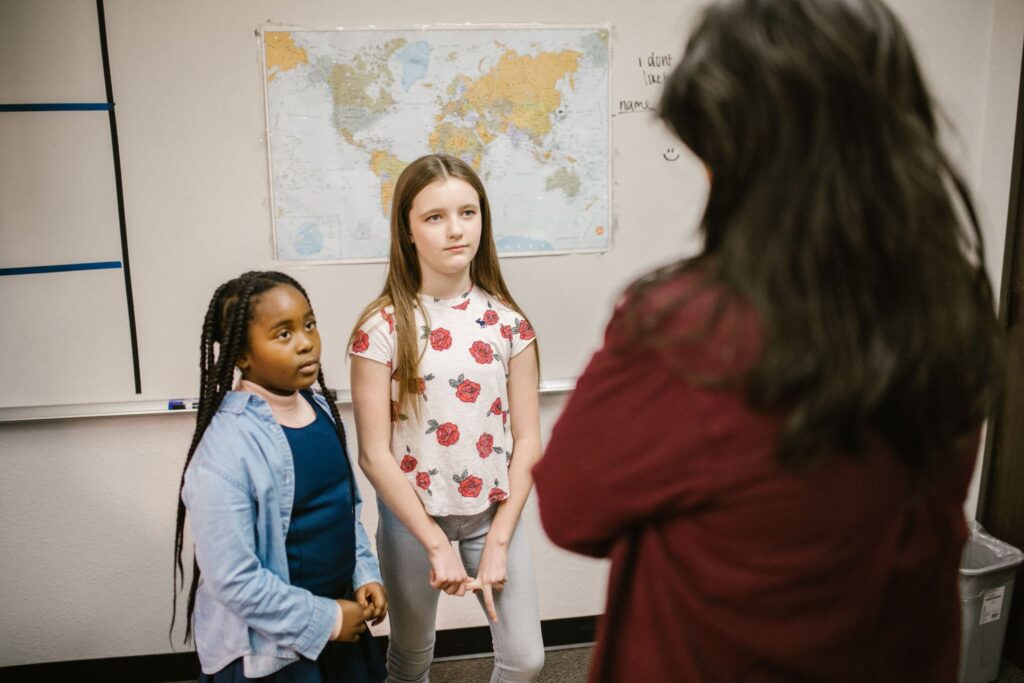
Kids today are facing way more stress, academic pressure and uncertainty about their futures than most generations before them. And while all that’s happening, school counselors are the ones quietly keeping things from falling apart. So, what do they actually do every day? Why does it matter so much? And can an online degree really help you become one?
Walk into just about any middle or high school, and odds are you’ll see a line outside the counselor’s office. Not always because something serious happened; sometimes it’s just kids needing help with college essays, family problems or anxiety that feels huge to them. Someone has to help them figure it out, and that’s the school counselor. Lately, though, their job has stretched way beyond handing out schedules.
What Does A School Counselor Actually Do
A lot of people still have that old “guidance counselor” image in their head: Someone who looks over your class list and maybe talks to you about which colleges you want to apply to. That’s not really the job anymore. Sure, academic planning is still part of it, but school counselors are also usually the first person students talk to about mental health, social issues, family struggles and figuring out careers.
Research from ASCA points to says that smaller caseloads lead to better test scores, attendance, GPAs and graduation rates. That’s a big deal. One counselor in a school can seriously shape the future for hundreds of students.
The Career Side Of Things
Helping students can be incredibly meaningful, but this is also a stable career. According to the Bureau of Labor Statistics, the median annual pay for school and career counselors was $65,140 as of May 2024. The field’s expected to keep growing at a steady pace over the next decade.
To get started, most jobs ask for a master’s degree in school counseling and a state credential. That’s why a lot of people are choosing online programs that fit around a job or family instead of quitting everything to go back to school.
Where An Online Degree Fits In
This is where programs like a school counselor online degree come in. Walsh University, for example, lists its counseling degree along with other programs like MSN, DNP and MBA. They lay out admissions requirements, costs and coursework upfront. Plus, they really focus on character and leadership development, not just the technical skill side. The site even has testimonials from real students and explains their accreditation clearly, which matters a lot if you want to get licensed and actually work as a counselor.
If you need to juggle work, family or just don’t live near a university, that kind of flexibility isn’t just nice, it’s sometimes the only way to get into this career.
The Numbers Behind The Need
Now for the tough part. The American School Counselor Association says schools should have one counselor for every 250 students. As of the 2024–2025 school year, the real number was 372 students for every counselor, even after a few years of improvement. Only a handful of states; Colorado, Hawaii, New Hampshire and Vermont, actually come close. In most places, counselors are stretched so thin, it’s tough to give each student the real attention they deserve.
But it’s not all bad. Around 529,000 more students had access to a counselor last school year compared to the year before, according to K-12 Dive. That’s a win. Still, elementary and middle schools are way behind, and the ratios can go above 570 students per counselor. The shortage is real, which is part of why schools need more trained counselors every year.
Real Schools, Real Pressure
This isn’t just something people debate about in education meetings. Earlier in 2026, a California school district got attention for changing its approach to make counseling more about actual students and less about paperwork, making sure counselors spend time with kids face-to-face.
Around the same time, a national survey showed that most high schoolers didn’t feel ready for life after graduation, right in the middle of the bigger conversation about helping students with that next step. Both stories point in the same direction: Schools are still trying to figure out how to support students in a way that actually works, and counselors are right at the heart of that.
The Bigger Picture
This doesn’t happen in isolation. Schools have more kids dealing with mental health challenges, changing family dynamics and bigger academic demands. Counselors are the steady presence; not just for moments of crisis, but year after year, watching students grow from nervous freshmen to graduating seniors ready for what’s next.
School counselors do way more than most people guess, and the numbers show how much of an impact they have. With counselor-to-student ratios still too high and demand staying strong, there’s lots of room for more professionals in the field.