

Ever wondered what those numeric strings mean? You’re not alone. IP addresses seem like a mystery shrouded in tech jargon, but here’s a fun fact: they’re as essential to the internet as coffee is to Monday mornings. Without them, our digital world would be as chaotic as a cat in a room full of laser pointers. Let’s jump into the intriguing realm of IP addresses, especially the curious case of 122.175.47.134.1111, and decode the secrets behind them.
122.175.47.134.1111
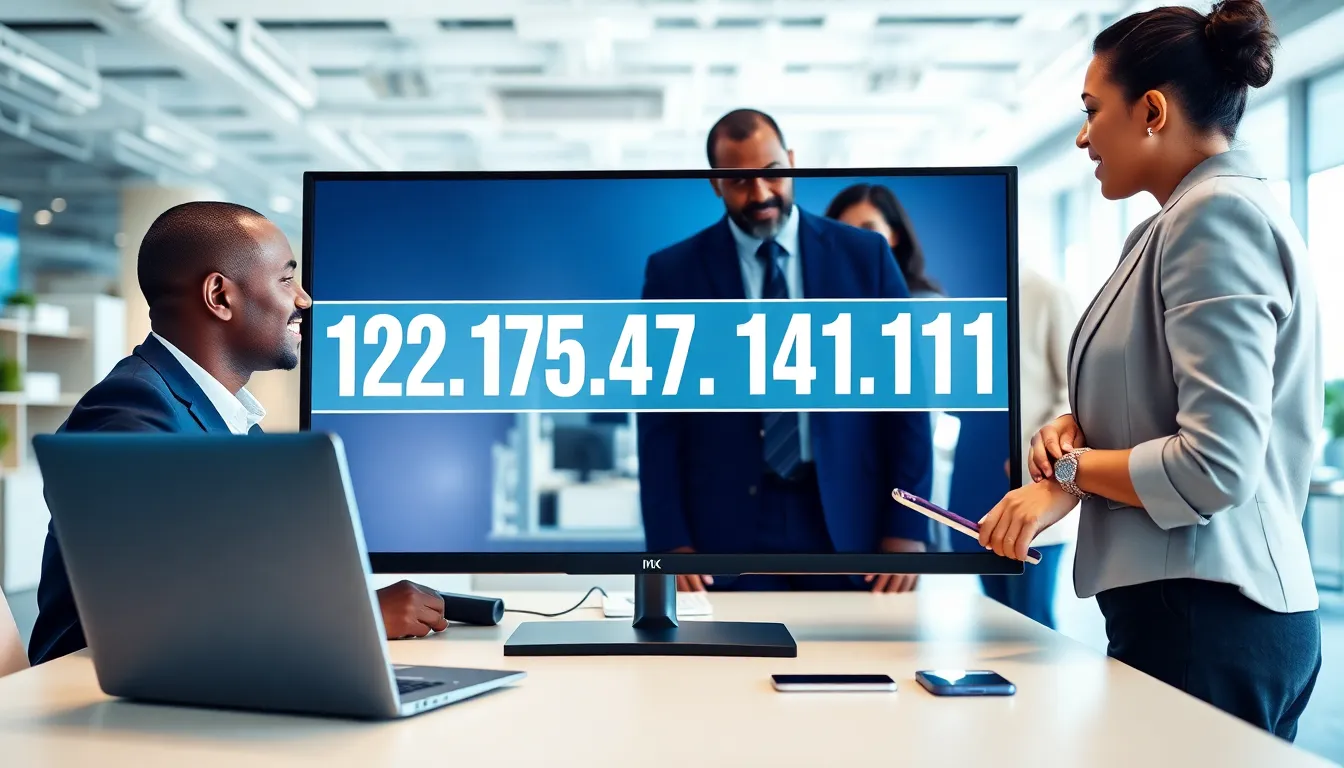
An IP address, or Internet Protocol address, serves as a unique identifier for devices connected to the internet. Imagine it as your home’s address but for your computer, router, or smartphone. Just as people use addresses to find each other, devices use IP addresses to locate one another in the vast online landscape. There are two versions of IP addresses: IPv4 and IPv6. The former looks like a string of four numbers separated by dots, while the latter comprises eight groups of hexadecimal numbers separated by colons. Each has its own purpose, but they both ensure you can surf the web with ease.
Types of IP Addresses
IP addresses can be broadly classified into two types: static and dynamic.
Static IP Address
A static IP address remains constant, similar to a permanent street address. It’s often the choice for servers or devices requiring consistent accessibility, like hosting a website or running a network printer.
Dynamic IP Address
On the other hand, a dynamic IP address changes frequently and is assigned by a Dynamic Host Configuration Protocol (DHCP) server. Most home users and small businesses rely on dynamic IPs because they are easier to manage and conserve the limited number of available addresses.
Each type has its own benefits and drawbacks, making it crucial to choose the right one based on your networking needs.
The Significance of 122.175.47.134.1111
Now, let’s focus on the IP address 122.175.47.134.1111. At first glance, it seems like a standard IP, yet it’s vital to examine its structure. Typically, IP addresses consist of four octets, making 122.175.47.134 appear correct. But, 1111 exceeds the four-part format, spicing up our adventure through IP addresses.
How IP Address Formats Work
When dissecting formats, it’s essential to determine whether the address is valid. An IP address should contain only four groups of numbers, each ranging from 0 to 255. If we take 122.175.47.134, it becomes clear that it’s valid while the addition of 1111 renders it invalid in traditional usage.
Occasionally, users might try to find a host through unconventional formats, leading to frustration and confusion. So, being able to recognize the structure of an IP address remains crucial.
Common Misconfigurations and Errors
Navigating the realm of IP addresses can lead to pitfalls without proper care. Common misconfigurations include assigning the same static IP address to multiple devices, creating address conflicts that lead to connectivity issues. Also, failing to update the DHCP settings correctly may result in devices being unable to connect to the network.
Troubleshooting IP Address Issues
If connectivity problems arise, several steps can help troubleshoot IP address issues. Checking if all devices are receiving their respective addresses correctly is step one. A simple restart of the router could very well clear minor hiccups. Should those steps fail, digging deeper into the device configurations or considering a reset might be necessary.
When to Seek Professional Help
Sometimes, even though best efforts, IP address issues persist, leaving users frustrated. When confusion reigns, errors continue or the configuration seems too daunting, it might be time to call in the professionals. Networking specialists can examine and resolve issues that may not be apparent to the untrained eye. They have tools and expertise that can quickly identify misconfigurations, conflicts, or suboptimal settings, ensuring seamless connectivity.